Key takeaways
- A screened porch is the simplest way to enjoy the outdoors without bugs.
- A three-season room adds glass and is used in mild weather.
- A four-season sunroom is built like a room addition and conditioned all year.
- Foundation, roof and glass choices drive how comfortable the room will be.
Screened porch
A screened porch has a roof, a floor, screens and often a ceiling fan. It is open to the air, so it cools naturally in summer and is unheated in winter. It is the least involved of the three and a good choice if you want fresh air and shade.
Removable panels can extend use into cooler weather.
Three-season room
A three-season room adds windows to a framed room, usually with limited insulation and no dedicated heating or cooling. It extends the season but is not comfortable in the coldest or hottest days. It is simpler to build than a full room but offers less all-year use.
Check whether your area treats it differently from a conditioned room.
Four-season sunroom
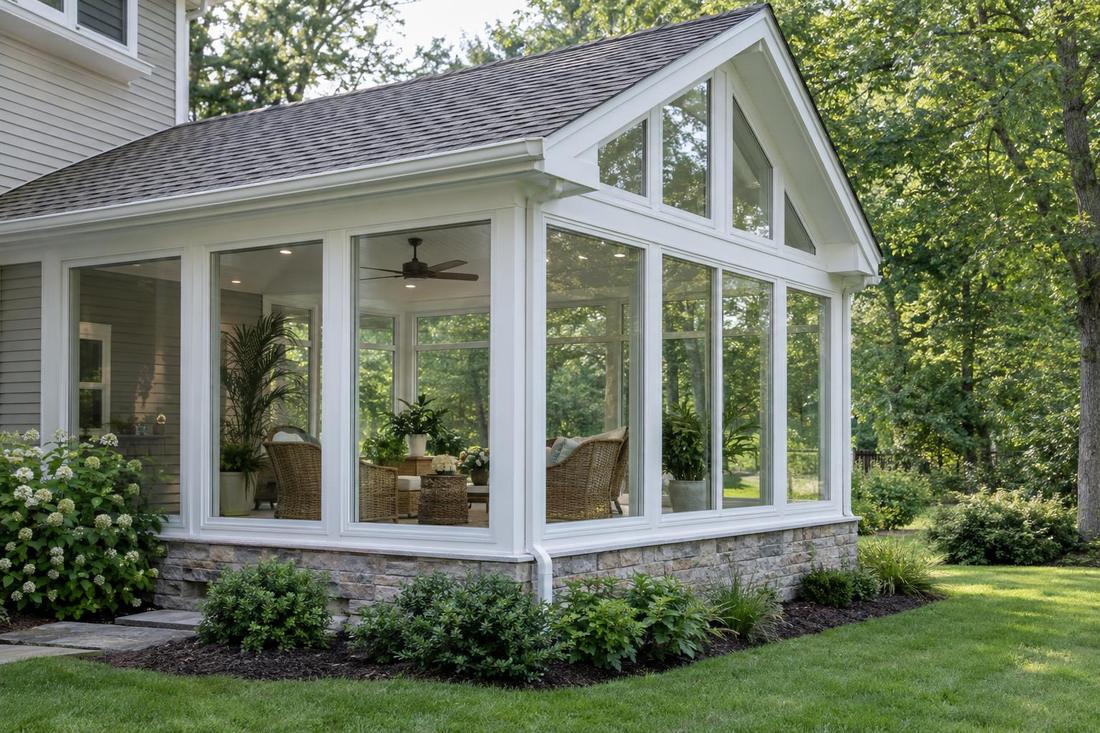
A four-season sunroom has insulated walls, a better roof, high-performance glass and heating and cooling. It is a true room that you can use every day. Because of the glass and exposure, the mechanical design matters more than in other rooms.
Plan shades or tinted glass for strong afternoon sun.
Foundation and roof
The structure beneath matters. A porch can sit on piers, while a four-season room needs a full foundation. The roof can be gabled, shed or vaulted, and its tie-in to the existing roof must be flashed carefully.
Ask your contractor to compare options for your site.
Official sources and further reading
These are independent organizations. Links open in a new tab.
Quick answers
Which option adds the most value?
That depends on use. Four-season rooms add finished space, while porches add outdoor living at lower complexity.
Can I upgrade later?
Often yes if the structure and foundation are planned for it.