Key takeaways
- Insulation and air sealing reduce how much heating and cooling the room needs.
- Mini-splits are often the simplest solution for one room.
- Extending ducts works when the existing system has spare capacity.
- A load calculation beats guessing by square footage.
Start with the envelope
A well-insulated, air-sealed room needs less equipment. Gaps around windows and outlets, thin floors over crawl spaces and vaulted ceilings with little insulation are the usual sources of discomfort. Fixing them while the walls are open is easy.
Ask what insulation your contractor plans for each surface.
Extend the existing system?
If the current system has capacity and the duct runs are reasonable, extending ducts into the addition can work. Often, though, the existing equipment is already sized for the old house, and adding rooms strains it. A professional should check before you decide.
Balancing airflow matters as much as capacity.
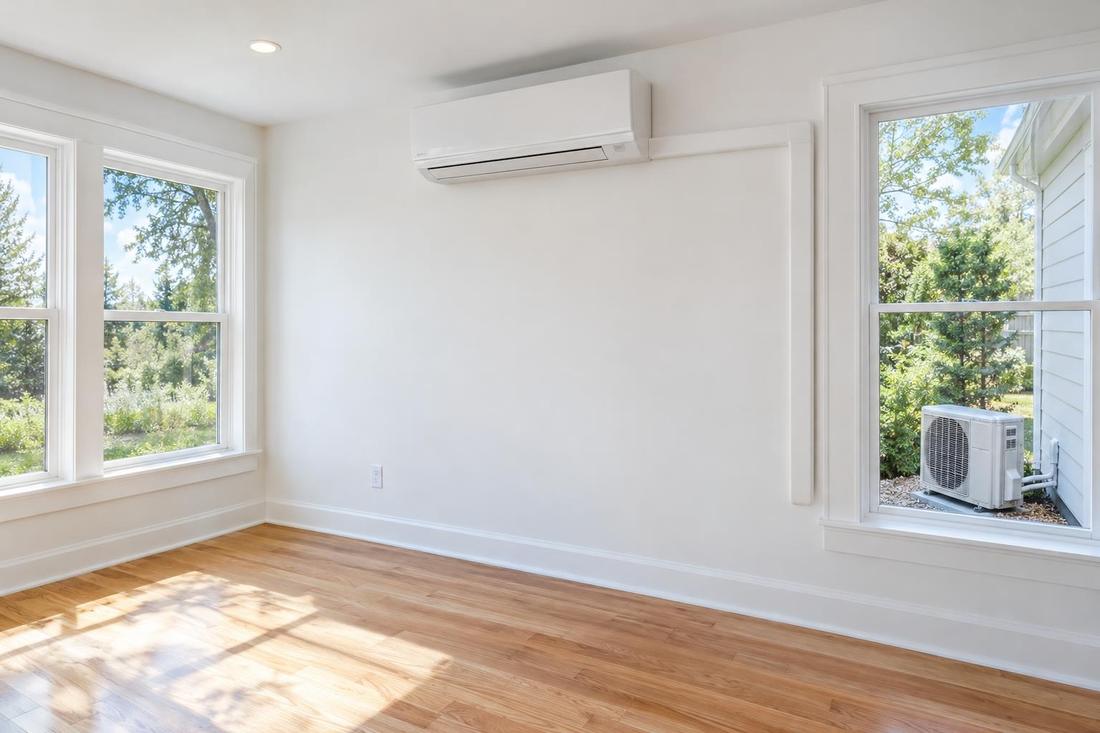
Ductless mini-splits
A mini-split puts a small indoor unit on the wall and an outdoor compressor outside, connected by a thin line. It is efficient, quiet and does not need ductwork. It is a popular choice for sunrooms, garage conversions and bonus rooms.
Multiple indoor units can serve different rooms.
Load calculations
A load calculation looks at the size, windows, insulation and orientation to size equipment properly. Oversized systems cycle on and off and feel clammy, and undersized ones never catch up. It is a small step with a big effect.
Ask your HVAC contractor to share the calculation.
Official sources and further reading
These are independent organizations. Links open in a new tab.
Quick answers
Can my existing furnace heat an addition?
Sometimes. It depends on capacity and layout, and a professional should check.
Are mini-splits efficient?
Yes. Modern units are efficient for heating and cooling single rooms.