Key takeaways
- Most families stay home, and a good plan makes it manageable.
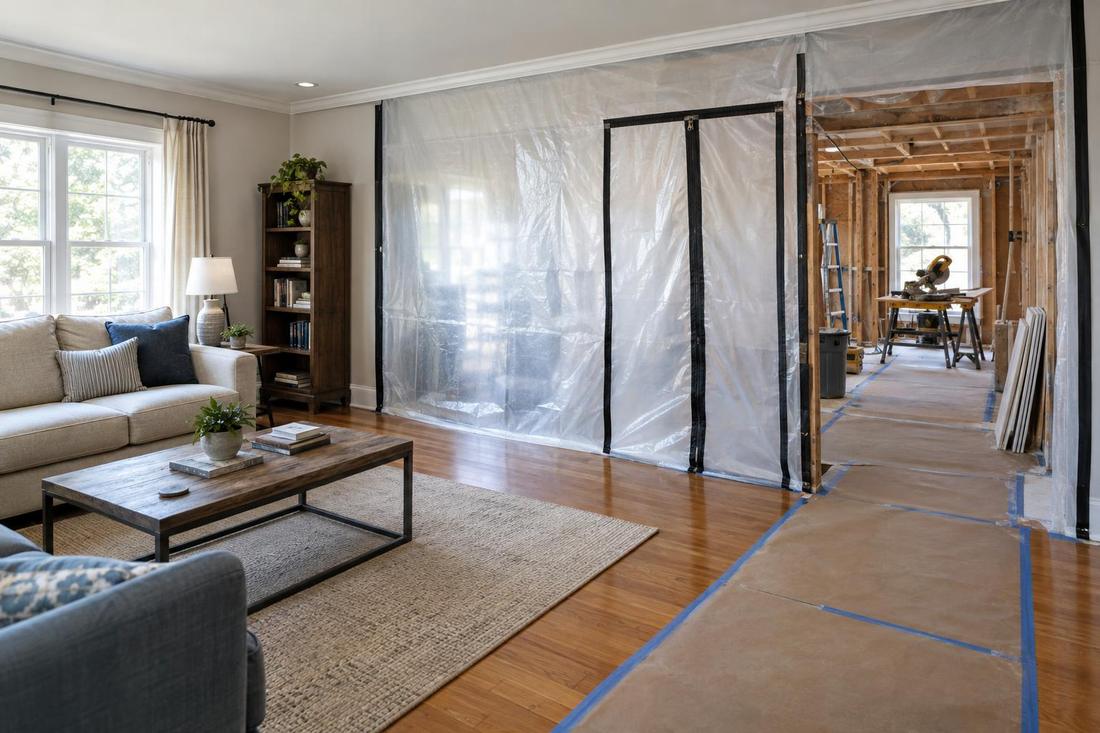
- Dust barriers, floor protection and daily cleanup keep the home livable.
- Plan for short utility shut-offs and for a temporary kitchen if needed.
- Talk about hours, pets, children and work-from-home needs before work starts.
Set up barriers and paths
A good contractor separates the work area from the living area with sealed barriers and a protected path for workers. Floors are covered, vents near the work are closed and a clear entry is set up so workers do not cross your living space more than needed.
Ask to see how they will set up before work begins.
Plan for utilities
Tying into plumbing, electrical and heating and cooling can require short shut-offs. They should be scheduled and announced in advance. If the kitchen or a bathroom is affected, plan a temporary setup so daily life continues.
Keep key phone numbers handy.
Safety and pets
Open walls, tools and materials are hazards for children and pets. Gates, clear markings and rules for the work area keep everyone safe. Pets may need a quiet room during noisy days.
Share your household routine with the crew.
Dust, noise and sanity
Construction is noisy and dusty even when well managed. Good contractors set working hours, clean each day and communicate about noisy days. If you work from home, tell the crew about important calls so work can be planned around them.
Consider a short stay away during the loudest phases.
Official sources and further reading
- National Association of the Remodeling Industry
- EPA lead-safe renovation rules
- National Association of Home Builders
These are independent organizations. Links open in a new tab.
Quick answers
Should we move out during construction?
Many families stay. Larger projects, especially those opening the roof, may justify a short stay elsewhere.
How do you control dust?
We use barriers, floor protection, air control near the work and daily cleaning.